All Posts By

Pandemic

Floris van Dijk POLITICAL UTOPIAS - March 2018

Ambitio Sine Qua Non

Written by Floris van Dijk

I don’t think Schopenhauer was right in saying that desire is the source of all pain. Human ambition is not necessarily harmful. It just needs to be filtered to bring out the good, and avoid the evil.

Ambition can take countless distinct forms, but it has never been a major concern to conceptualize them. Historically, all forms were encompassed by the term ambition. In Latin, ‘ambitio’ is derived from the verb ‘ambire’, to strive. Aristotle’s Nicomachean Ethics claimed that there was no word in Greek that unambiguously represented the virtuous intensity of ambition. This lack of conceptual clarity perpetuated for centuries, as it remains vague usage that we know today.

The establishment of the feudal system in Europe was paired with a general critique of ambition. Ambition was taboo because human agency bred an impulse at odds with the infallibility of the natural order, the will of heaven. At a time in which identity and rank were determined by birth, ‘reaching for the stars’ was deemed immoral.

Even as late as 17th century France, ambition was defined as the “unruly passion for glory and fortune”, in contrast to piously seeking the reward of admission to heaven. The ideal citizen was eager to perfect subservience to the king and church.

This distinction, however, held only as long as clerics held the supreme power. The French Revolution, American Independence, and the victory of British free trade principles all gave way to a more liberal turn by the end of the 18th century. This brought the possibility of a larger part of the population claiming political and economic opportunities, and was accompanied by the redemption of ambition in language and literature.

As early as 1815, Benjamin Constant was one of many who believed that “ambition is compatible with a thousand generous qualities.” Today, the word ambition as a whole has a positive connotation across languages and cultures: most universities select ambitious students, recruiters search for ambitious applicants, parents want ambitious children.

Nevertheless, unanimity on the value of ambition has not been reached. Philosophy of the arts and architecture-professor Yehuda Safran wrote that “to have no ambition is perhaps the highest ideal.” The reasoning behind her belief is understandable: beyond the personal gains that the tranquility of the ambition-free mindset brings to an individual, the rejection of ambition can be considered beneficial to society, in that it dissolves a fundamental cause of systemic instability.

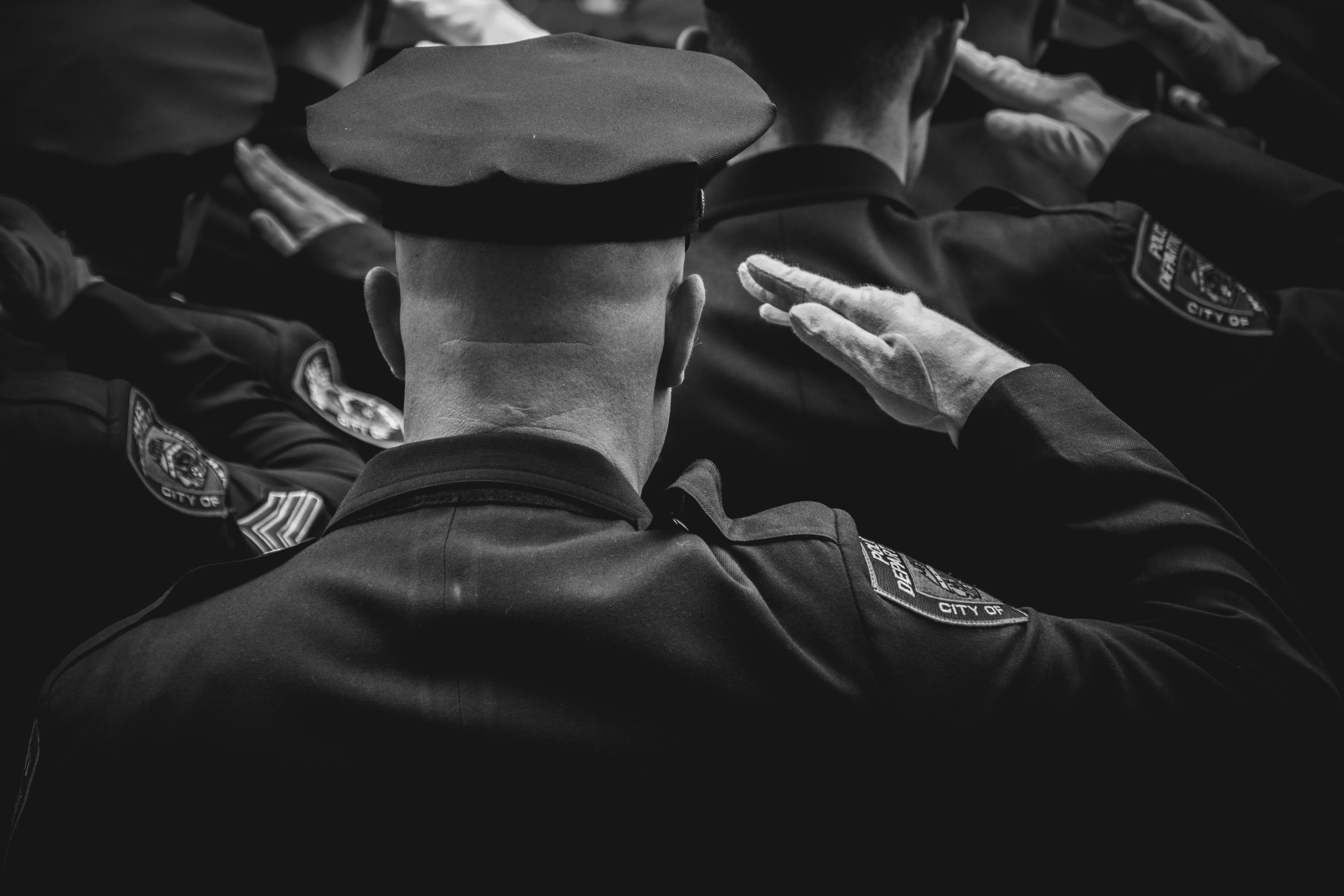
Photo by Faustin Tuyambaze

When looking at democratic political practice, ambition is indeed dangerous; it was the ambition of individual men that brought down the Republics of Rome, and Weimar. It was the ambition of individual politicians that caused the fragmentation of political parties in the French National Assembly during the interbellum, which caused years of governmental instability and ineffectiveness. It was the ambition of individual warlords, trying to reinforce their personal influence, that explains the death toll of 40 million during the Three Kingdoms period in China.

Ambition is a cause for political coups, a cause for rebellion, a cause for war. Thus, a world without ambition would be a utopia less likely to experience these threats. Yet, if humanity wasn’t moved by the powerful forces of hope, desire, and aspiration, what would the world look like?

It is unthinkable to achieve goals without ambition. So what we ought to do is not to indiscriminately suppress ambition as Schopenhauer would’ve advised, but treat the topic with a little more nuance.

Naturally, extreme forms of ambition can be destructive. This is common sense, but as I perceive it, ambition can have three different outcomes: preservation, creation, or appropriation. There are different expressions of ambition with different psychological and behavioral manifestations; respectively, the ambition to cultivate, the ambition to build, and the ambition to conquer.

The ambition to cultivate aims at preserving a capacity or skill; like keeping a particular ability strong, or maintaining an impeccable backyard. It’s best represented by the example of an athlete: he runs in order to maintain his health and to ensure his fitness over 20 years. Another intuitive example is the practice of a language, done with the sole goal of staying proficient. Not with the underlying goal of applying in the future for one specific job, but for the cultivation of personal knowledge.

The ambition to build seeks creation. It’s the motivation of the architect drawing up blueprints for an opera house with an incredibly imaginative design. In a way, it’s what causes the academic to forget himself in order to focus fully on his study of a subfield for 50 years, in order to contribute to the elaboration or refutation of theories. And of course, it belongs to the emotional core of artists, businessmen, and city mayors.

The ambition to conquer is, without doubt, the most spectacular. It’s this ambition that fuelled the establishment of the great ancient empires, the subjugation of almost the whole world by the European sea powers, and finally the initiation of the Imperialist and Fascist world wars. Essentially, the ambition to conquer seeks appropriation, colonization, annihilation. History books are full of it; many wars were directed by just a few men seeking prestige, while some were started by a nation seeking status. Such ambition is often presented in epics as both glorious and heroic, particularly those actions fueled by a desire for revenge.

Of course, actions are rarely motivated by only one of these forms of ambition. Hybrids of diverging intensities of one form or the others are the rule rather than the exception. Though the most common critique of ambition as a whole concerns this third kind. In a utopia, this form of ambition should no longer exist. It is simply too dangerous.

Most notably, the high-powered nature of the ambition to conquer is destructive at its core. A striking example is Paraguayan President Francisco Solano López. One of the major causes, if not the main cause, of the deadliest South American war was this man’s ambition. It led his small, technologically-inferior nation of half a million into an unwinnable war against an alliance with a combined population of 11 million. This “war of the Triple Alliance” led the Paraguayan population to be cut from 525,000 to 221,000, of which only 28,000 were men. The ambition to conquer has put unbearable sufferings on people across time and space.

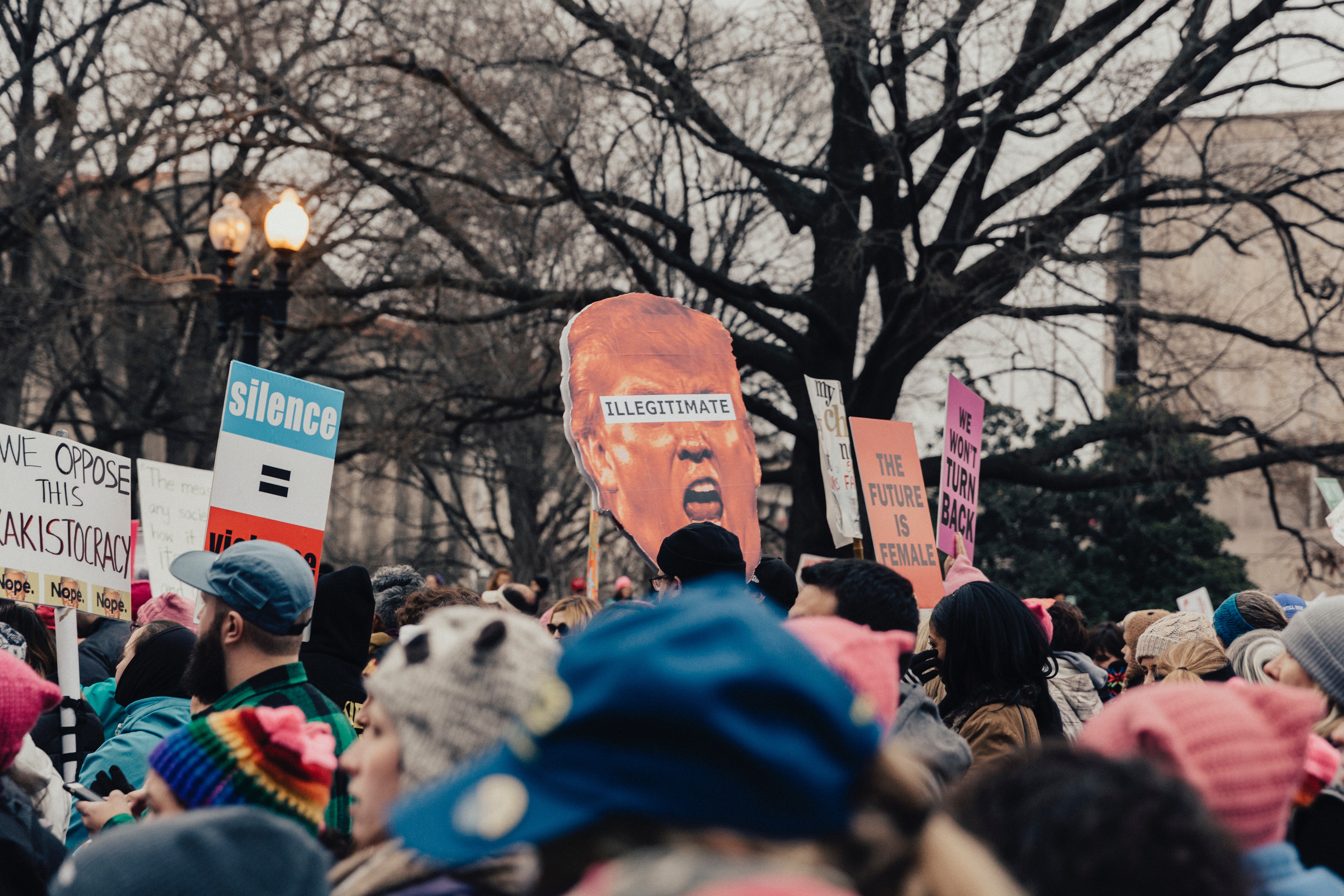
Photo by Danka Peter

Numerous victories aren’t satisfactory for the conqueror, either. Success only feeds this ambition, creating a bottomless abyss, a self-produced addiction. After beating one enemy, you can’t wait to face the next. Pyrrhus couldn’t be satisfied by becoming king of Epirus; he next invaded southern Italy, and then Sicily, and then Macedon, and then the Peloponnese. Each new campaign meant the loss of prior winnings, and eventually the loss of everything else (including his life). Alexander the Great’s empire stretched from Macedonia all the way to Persia for a few years until it crumbled because he just couldn’t get enough. The leader trapped in the vicious circle of conquest resembles Sisyphus trying to roll a boulder up a hill.

A final warning, the ambition to conquer inevitably affects the individual’s relation to others. It’s the suspicion that friends stand in your path to success so you must drop those friendships holding you back from your potential. After all, as French surrealist and poet Phillipe Soupault said “the main enemy of friendship is ambition”. Famously, former French prime minister Edouard Balladur betrayed his close friend the former president Jacques Chirac, as he stood in his way in the race for the presidency. Examples of self-destructing ambition are numerous throughout history. Again, reference should be made to Alexander the Great. Not only did he lose the loyalty of the exhausted soldiers whom he fought alongside for a decade, but he also killed one of his dearest companions, Cleitus the Black. Supportive relationships can never be more than a means to an end for the conquest-driven soul.

Discussing ambition “in its essence” is impossible, since the word doesn’t have one single essence. Ambition is a neutral term, but we should not uncritically support all forms of ambition. We should hold on to our desire to build or cultivate while limiting our drive to conquer. To build the ideal society, humanity doesn’t have to abandon part of what makes it human, but instead learn to avoid the unsustainable and destructive form of the ambition conquer.

Issues POLITICAL UTOPIAS - March 2018

March Issue: Political Utopias

Dear Infected,

For better or worse, the last couple of years have been an exciting time for politics. From Brexit, to the election of the 45th US President, to a string of referendums for independence, people who might otherwise have ignored the political cycle have been forced to care. The threat of blatant corruption may discourage some from taking part, but passivity doesn’t incite change. For March 2018 Pandemic would like to give voice to the ideas you can’t share at the dinner table with the theme Political Utopias.

With the way media works, the loudest and most controversial voices tend to be amplified above all others. But we know that these voices of decisiveness and hate are not the only ones out there, and that a divided world is not the only alternative to the world we live in now. Theirs is a vision of utopia derived from the Greek οὐ (“not”), meaning “no-place”. We’ve experienced their vision of the world in extremes, with human slavery, the oppression of women, and the holocaust. It’s not a place we should go back to.

This month’s theme uses the utopia derived from the Greek εὖ (“good”) to mean “good place” which we are closer to now than at any other point in human history. When the voices of repression grew loud, the voices of the repressed grew louder. We cannot let the wave of progress seen in the #Metoo movement, or March For Our Lives, lose momentum. Nor should we think that the fight is over once a few goals are achieved. History has shown that there is always a new instance of injustice waiting to crop up, so those seeking justice must be ever vigilant.

To help start the discussion we’re launching the issue with four articles representing the authors’ personal visions for how the world could, and maybe should, be changed. No article contains a design for shaping the whole world at once, but each one can be considered a piece of the puzzle we’re trying to build together.

Hopefully reading these articles inspires you to write your own, and join this issue’s debate.

We look forward to hearing from you!

DRUGS - February 2018 Podcast

The Pandemic Podcast: Episode 1

Welcome to the first Pandemic Podcast!

We hereby introduce our hosts, Darius Jokubauskas and Sebastian van Eerten. The guest speakers are two of our very own writers, Chloe Gregg and Nike Vrettos.

Interested in getting a deeper insight into study drugs, or the impact of cocaine in Colombia? Ever wondered about the consequences of drug legalization? Are drugs really that bad as your parents told you? Together with your hosts, we’re going to discuss drugs on a societal level, zooming out from our usual individualistic perspective.

Stay tuned until next month for our episode on political utopias!

Download

Length: 46 minutes 6 seconds

Music: Down Homey by DATAMONKEY


To read more about the topics from this episode, check out the following articles:

Addiction: The View From Rat Park (Bruce K. Alexander)

Portugal’s radical drugs policy is working. Why hasn’t the world copied it? (The Guardian)

A Comparison of Harmful Drugs (Rijksinstituut voor Volkgezonheid en Milieu)

The UN’s war on drugs is a failure. Is it time for a different approach? (The Guardian)

Post-Vietnam heroin use and injection by returning US veterans: clues to preventing injections today (US National Library of Medicine)

Contributing Writers DRUGS - February 2018

How Drawing Stoned Enriched Me

Our final submission for this February’s Drug issue comes from Miriam Schröer who shares with us her some weed inspired art and the story behind it.  
 

Written by Miriam Schröer

I remember I liked drawing a lot as a teenager. However, I gave up on drawing sometime during my last years of school. I didn’t notice the practice of drawing vanishing from my life. Yet, if reflecting back on it now, I think at that time I was much too focused on delivering only the best of me. I’ve always been a person who likes control (or the illusionist feeling of being in control of things). I only would have continued drawing if I had expected to become an excellent artist. Drawing would have demanded a lot of time and energy, and I would have needed to invest a lot of discipline and practice. But my life plans didn’t paint me as a painter.

Today, I feel confused about the extent to which I fell victim to a notion of optimizing my life, and accordingly my activities. When I moved to Amsterdam and got into the habit of smoking weed occasionally, I noticed how my mind could liberate itself from this notion of perfection.

I have stuck to keeping a diary pretty much all my life. When I smoked joints, I started making little sketches in my diary again. It came naturally. I let go of my perfectionist expectations. To just draw and see where it went felt like a rediscovery of knowledge I had when I was younger, but that got lost somewhere along the way.

It was an unexpected reconnection to the act of enjoying just doing stuff without expecting a specific outcome. I could find great sense in the act of drawing in my diary and wasn’t bothered by the fact that I didn’t find the drawings particularly meaningful – or even beautiful – when looking at them again the next day.

This picture is a visualization of what the joint does to my mind. I tend to feel free from my linear self-critical thinking and societal expectations about what to do with my life and how to behave. The joint gives me ideas that feel closer to my most genuine conscience.

I don’t think smoking joints every day would be a good idea for me, but adding ideas that I have when stoned to my sober ideas has been an enriching practice for me. When a joint makes me feel at ease making sketches in my diary, my sober self can tolerate doing fun stuff like that more easily.

So thank you, weed, for letting me embrace the pleasure of taking it easy.

Contributing Writers DRUGS - February 2018

The Epidemic in Tijuana

As we near the close of this month’s issue, it’s worth remembering that every drug statistic is an aggregate of individual lives. In the following poem, Dinora Escobar shares the story of a young woman living with drug addiction far from home.


Written by Dinora Escobar

Tijuana, a famous city on

the border of Mexico and California, USA.

An area known as Zona Norte, by the Tijuana Arch.

The Arch is well known. At the entrance of Tijuana, right in the heart of Zona Norte.

It’s like a little Vegas”, as many tourist say, but much more poor and dangerous a place; full of drugs,

prostitution, crime, poverty. A place where everything has a price, even your freedom.

Law enforcement is corrupted, a place where many come to fulfill their fantasies, and go home like nothing

ever happened. But what about those that this is their reality. A fast lane life, a place that, to many is a fun,

tourist place and to others this is home. A place to survive.

A place to easily get caught up and lost, where many end up like Ieesha Shiann.

Ieesha Shiann, is a female aged 24, born in mid east of the United States.

She resides in the “zona norte”

located at 1st and coahuila.

Ieesha, living life day by day.

To support her drug habit and to get by she is also a worker of the streets, prostitution. She uses heroin and crystal methamphetamine, also known as “criko”or ice” on the streets.

Ieesha has a story that no one knows. A lot of people wonder, but don’t understand her due to the language barrier, and that she’s mostly in her own world of hallucinations. It is hard to get a full story or even a full sentence without distractions.

I asked Ieesha if I could interview her. She seemed a little scared, uncomfortable with the idea of it, but then she agrees.

Ieesha where were you born?

In Minnesota with the snow and where I lost my babies.

You have kids?

Yes two and I lost them.

How did you lose your kids?

The system took them from me and put them with another family and I don’t know where they are.

Why and how did you start doing drugs?

I lost my kids, don’t know where they are.

How did you end up here?

If you’re not from here?

He left me here.

Who?

A men we got high. I was so high on drugs I can’t remember, but we were here together getting high. High, for a couple of weeks and one day he left, I couldn’t find him I didn’t know what to do.

How long you been here?

I think three years

Where’s your family?

Don’t know I need to contact them, someone to let them know where I’m at.

What do you consume and how do you get by as far as financially?

You want sex?” That’s all I say to get “globo”.

Globo means balloon in English. A word that is used for the little plastic containing the drug.

Where do you sleep? Shower?

If I have money motels sometime, or a client will pay for a room all night and if not I sleep like the” dogs and cats”.

What does that mean?

Wherever I can lay down on the streets. If is cold or rains I can use boxes to shield myself from the cold.

Ieesha has asked me in the past if their are any Rehabilitation Centers here in Tijuana.

Yes there are but as private organizations. So there’s a fee.

At times I just wonder about Ieesha. She comes in sayshi”, she stares around. and she cries. Cries and she only speaks of what I believe is a constant memory to her, in her head. What she can still remember and acknowledge; her kids that she lost and a man that left her here.

Why don’t you cross the border if you’re a USA Citizen?

I never go to border or cross. Nope never cross.

Why? You can get help out there.

Is too late. Where do I go?

Like many others Ieesha randomly sleeps in the streets and hopes for shelter.

She goes around to the local stores at times to ask for food, including my work place.

Many people that know her will hand out clothes to her. They say she wasn’t like this at first.

She was a normal, healthy, young girl,

but drugs have made her lose herself to the streets.

Ieesha