All Posts By

Pandemic

THE CITY - April 2018

Walls

Written by Chloé Gregg, Staff Writer

Car horns and bicycle bells echo outside the tall beige walls surrounding the Wisteria Lane-inspired houses of the compound. Absorbed in a game of spies – which involves a lot of pranks on the guards surveying the residence. At times when the air is especially hot and sticky from the exhaust of engines, she notices the stomach-churning odor coming from the river. Like rotten eggs. Having lost track of time, she’s suddenly called by her mother to jump into the lime-green taxi waiting in front of the house.

“We’re going into the city today, remember?”

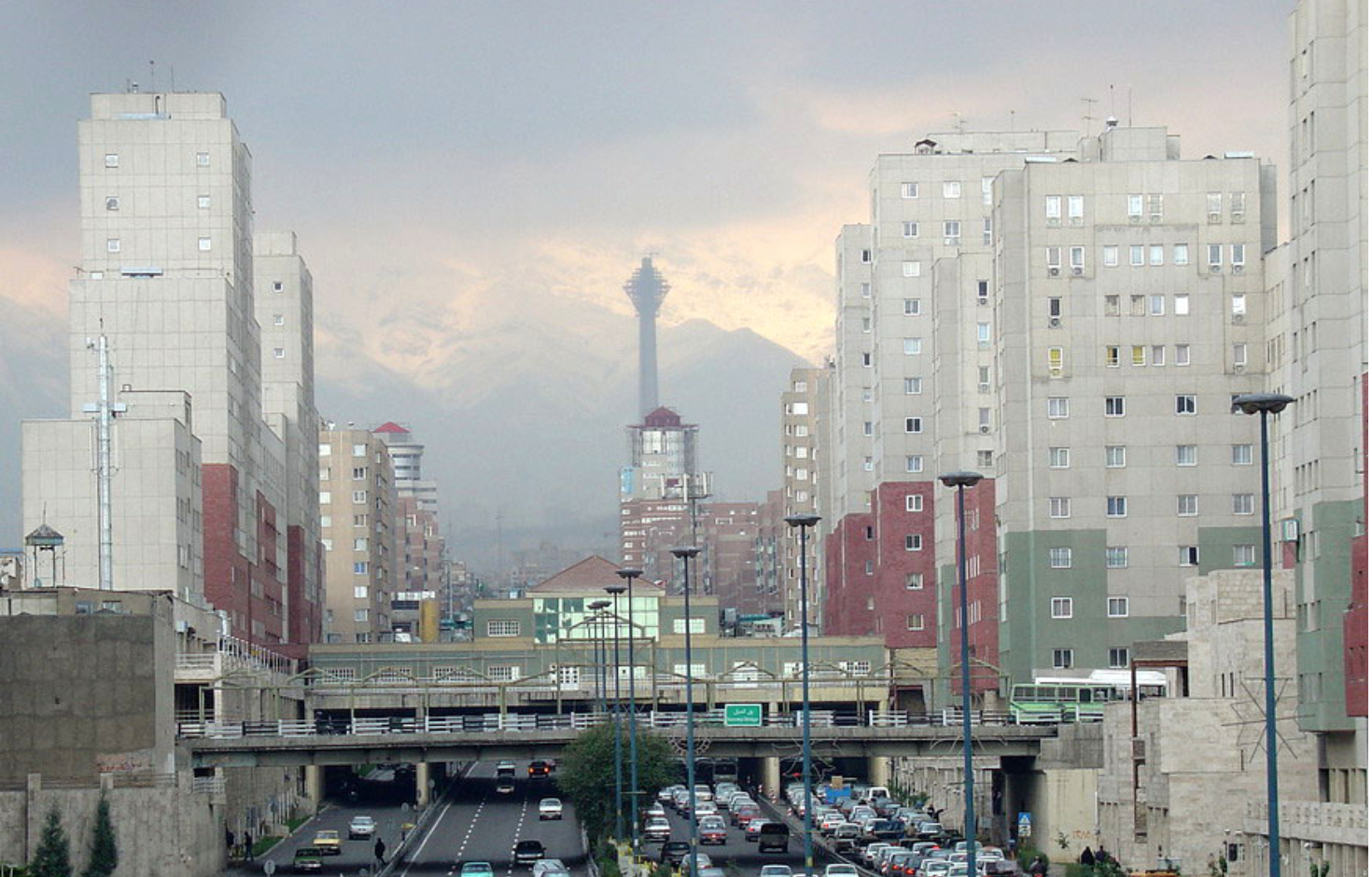
The city. Behind the pale compound walls she’d forgotten about the chaos outside. There were millions of people living out there, mostly crammed into tiny damp rooms among decrepit blocks of cement. Everywhere in the city, people had built walls.

The other morning as she crossed the impeccable green lawn that cushioned her house, and saw two neighbors walk out from separate homes, dressed in strict-looking black suits. They each stood silently on the edge of the pavement as they waited for their separate chauffeurs to arrive and take them off to work. Avoiding eye contact, they took a discrete look over the small patch of grass that divided them, then glanced back at their watch as quickly as possible. They never uttered a word. It seemed so strange because she knew their children, they were good friends. Most of the kids would meet up every afternoon after school and play hours upon end in the common gardens until dusk. The adults, however, always seemed in a hurry, eager to hide away once again behind those walls.

A lot of the things she saw made her fear the city. It seemed like a daunting and lonely place. Whenever she went with her mum to the markets, she’d see homeless people kneeling down, eyes closed, a handout, asking for some coins. People kept passing, treading on their blankets and shooting left-over cigarette buds directly at them. Afraid, but curious, she’d sometimes let her eyes linger on a missing limb or a strange deformation. It sent shivers down her spine. Yet, these images appeared to disturb no one else. Once again, it seemed as if people had placed walls, right there, in between each other, like masks of false reality.

Aside from a few parks, the city rose over her head like a giant concrete mass. Glimmering new skyscrapers popped out from the ground nearly every day and stole a little more of the sky. She’d only ever known it in one shade, gray. She remembered the last time she’d gone to visit her grandparents in the country. Her parents had told her to breathe in all the fresh air she possibly could to cleanse her lungs from urban fumes. She remembered the vibrant colors of the vegetable patch and the salty smell of seaweed on the beach. In the country, her grandpa would often take her to see the cows at the nearby farm. The neighbors lived so far away from each other, yet they all knew when she was back in town. People stopped her at the bakery to ask for news and smiled at every person they crossed when walking.

Back in the city, she never met a familiar face. There were so many people in the streets, walking side by side, yet they never seemed anything more than perfect strangers.

As she grew older behind those compound walls, she began to see the city in a different light. As a weekend escape in the city before exams left its mark. She slid through the metro’s doors and collapsed onto the closest seat, she felt the drain in her body and the thin mask of urban dust that had accumulated on her face. Not daring to cross anyone’s eyes, she sat staring blankly at the window’s safety warning sign. She shifted her gaze to find a new point to stare at, settling on a young man hoping onto the carriage with a guitar.

Walking from the station towards her house, she felt a sting in her chest thinking about leaving the city again. She realized now what it meant to her.

She liked the furor in the streets, the neon lights flashing faces that scurried by. She liked the thrill, the rush, the endless opportunities. Feeling limitless, the city was a drug that kept her going until dawn where she’d see emerging signs of life. Wondering what all these strangers were doing, in which bed had they spent the night? The fantastic cluster of all these parallel lives. She liked that feeling of alienness amongst the crowd. The unpredictable fate they all shared in isolation with one another.

She knew the city could be a lonely place, but seldom gave herself the time to think about it. The walls kept her in comfortable isolation. The perpetual circus of distractions kept her lonely thoughts at bay.

THE CITY - April 2018

What can Brown do for you?

Written by Christian Hazes, Staff Writer

“A wall of bullets comin’ from

AK’s, AR’s, “ayy y’all duck!”

That’s what momma said when we was eatin’ the free lunch

Aw man, goddamn, all hell broke loose

You killed my cousin back in ‘94, fuck yo’ truce!”

Kendrick Lamar – “m.A.A.d city”

The picture painted here is the perfect epitome of how many know Compton: crime, poverty and perpetual gang violence. Aspects that are all vividly chronicled by the many rappers that the city has produced. Accommodating roughly 100,000 inhabitants, the sunbathed city just south of Los Angeles was long seen as the most dangerous city in the United States. Not surprisingly, until recently the election campaigns for mayor always consisted of the same ingredients: get rid of drugs, get rid of gangs and get rid of (police) violence.

The major point on the agenda during last year’s city elections? Fixing Compton’s pothole problem.

That’s one hell of a U-turn. Although the city still struggles with crime, poverty, and unemployment, Compton seems to be heading in the right direction under the aegis of Aja Brown; the young, black, female mayor is steering the city towards a bright future.

Here are some lessons straight outta Compton.

“It’s funny how Zulu and Xhosa might go to war

Two tribal armies that want to build and destroy

Remind me of these Compton Crip gangs that live next door

Beefin’ with Pirus, only death settle the score”

Kendrick Lamar – “The Blacker the Berry”

The seventies of the previous century were, to a great extent, the catalyst of Compton’s problems in the years to follow. Crips and Bloods gangs started selling drugs and the police department responded with military tactics, showing a fondness for excessive weaponry. On top of the problems that already existed, a vicious circle of ever-growing street violence was the result.

It is not hyperbolic to say that solving Compton’s problems was, and still is, a Herculean task. Nevertheless, there is always someone who is up for the challenge. The redeemer of Compton came in the form of Aja Brown. Her mom grew up in one of the poorest districts of the city, her grandma was killed during a gang robbery, and she became the city’s youngest mayor ever in 2013.

Dealing with Compton’s infamous gang-related problems was one of Brown’s paramount priorities. An initiative was launched which allowed Bloods and Crips to hand in their weapons to the police. The hundreds of gang members who did, received money as compensation. In addition to this, Brown managed to get prominent Bloods and Crips leaders on speaking terms. Men who had refused to speak to each other for decades were brought face to face in a municipality building. Another important aspect of her gang intervention strategy was to focus on prevention rather than cure. For example, Compton’s youngsters receive education on how to refrain from succumbing to the art of peer pressure.  

From having 36 murders in Brown’s election year the number had dropped to 13 murders two years later, the lowest in over 20 years.

“Nigga, I was rehearsing in repetition the phrase

That only one in a million will ever see better days

Especially when the crime waves was bigger than tsunamis

Break your boogie boards to pieces, you just a typical homie”

Kendrick Lamar – “Black Boy Fly”

Being born in the city called Compton used to be seen as a curse: you were trapped, doomed to fail. So social immobility had been another adversary of Brown’s.

She started by battling inequality, thus shifting the power structures that existed in the city. Instead of the predominant white masculine elite, power had to be distributed in such a way that it reflected Compton and its inhabitants. Brown focussed on combining quality with diversity, herself being the perfect personification. She has multiple university degrees in the field of social and urban planning.

Brown is aware of the fact that she forms an exception; most “Comptonians” do not hold any degree at all. Still, she set about invigorating a sense of membership, enhancing the involvement in civic activity and increased transparency between residents and the upper echelons of Compton’s leadership. Which was the catalysts for a radical political purge, a thorough redistribution of power.

The fact that Brown is the first female mayor of Compton in over 40 years, according to her, could not have been a better example of why another one of Brown’s action points with regard to emancipation is justified and indispensable. Female leadership is invaluable according to Brown and, many girls from a young age on are being involved in societal projects that teach them relevant management and leadership skills.  

Compton is currently going through a profound metamorphosis. Gang affiliation, violence, crime, and squalor kept the city from maturing. But, Aja Brown has started nurturing the city. Besides reducing crime and bridging social gaps, police departments have been reformed, budgetary deficits and unemployment have evaporated, and social housing thrived. All part of an all-encapsulating 12-point action plan, designed to elevate Compton. Compton’s status quo of being eschewed is part of history now. In fact, ample people and businesses want to move straight into Compton in 2018.

Needless to say, it is not an easy task turning one of the most notorious places in the U.S. to a Garden of Eden. Hopefully, Compton is able to complete the metamorphosis. 

It seems that Kendrick was right after all: “We gon’ be alright!”

THE CITY - April 2018

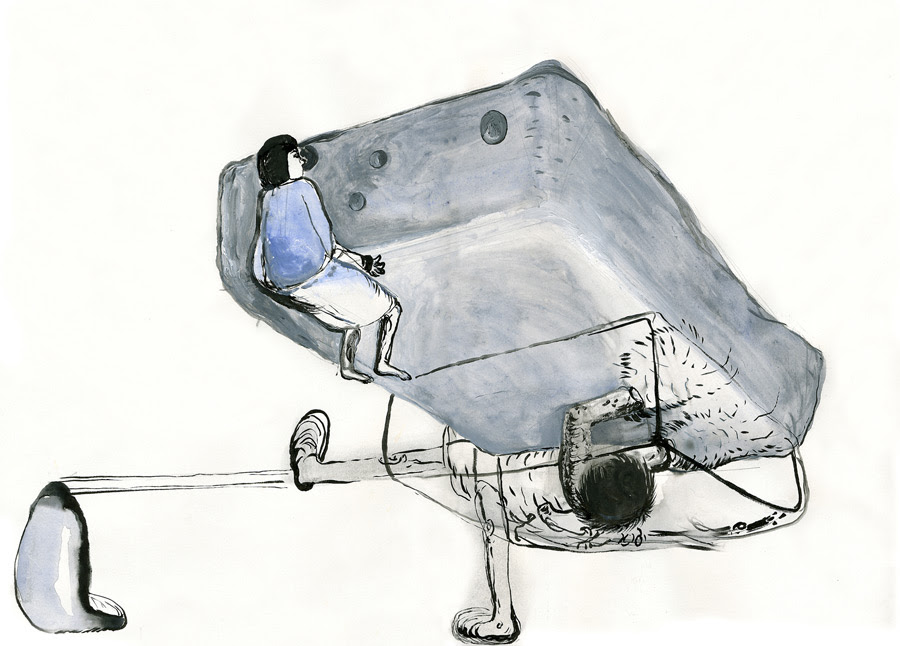
MEUBILAIR ZIEK

text by Dieuwertje Hehewerth, artwork by Marianne Theunissen

Every few months a glitch in the Amsterdam recycling system reveals itself. I know it to be citywide because it has been seen, and remarked about, at several addresses. Perhaps it’s not even a glitch. Perhaps it’s more of a loophole. Perhaps it is one shady company, dumping the by-product of their business at alternating recycling corners. But what reveals itself as something more than average company trash, is the content.

Every few months, on a Monday evening, the entire content of a home, complete with office files and family photographs, is (un)ceremoniously dumped on the street. Over the next 24 hours, before the trash services arrive, the site is excavated by the passing community. Serious middle-aged men with black vans park on the corner to scavenge for electronics. Proximate neighbors venture down to pick out antique drawers and chairs. Pedestrian art students pass by picking up mirrors, picture frames and canvases bearing amateur paintings in varying degrees of completion. What was once pure content now becomes pure form. A painting turns into raw material, an opportune canvas to repaint and reuse. Frames, once hard, protective edges of memories, now eclipse the photographs’ they were employed to hold. Severed from the narrative to which they belong, these objects quickly decline to mere usefulness, scavenged for their potential in a 24-hour window before entering their destined status as irretrievable, globe- clogging trash.

The word narrative stems from the Latin narrāre, formed from gnārus, ‘knowing’. With the ties between these objects unknown: the stories of how they arrived; what they represent; who gave what, and came when, and thought so, and laughed at, and was snapped – frozen in the photograph now bleeding in the rain behind a cracked glass frame. Without knowing this, the objects’ new composition frames them as a pile of ‘stuff’. The loss of their context transforms their narrative, the loss of their composer leaves them abandoned as a collapsed song, fragments to be picked up into new constellations the moment they hit the context of the street.

‘Stuff’, coincidentally, is a common term used by art students to describe what they make, and building a narrative – a critical reflection as to how, and what, and who, and when, and why they make the stuff that they do – is a necessary counterpart in art education.

One can almost locate an art academy merely by observing the movements on the street. Paying attention to the belongings of pedestrians, the closer one gets to an academy’s grounds, the greater the density of bodies married to stuff can be seen. A mattress curving over a pair of staggering legs; a long piece of timber bouncing in time to a striding shoulder; a dismembered chair offering an eye through which an alienated arm is a thread. Or perhaps it’s more of a loophole. A mar in the object’s original composition that allows it the possibility to be carried – for kilometers on end – to a new home, a new composition, a new train of thought.

Duchamp often substituted the word ‘artist’ with ‘author’, and the migration of these narrative-less objects towards studios might bolster this cross-pollinating flare. Rather than creating more stuff, these practices paint portraits of a glitching society through the fragments of constellations that are no longer there.

Jurek Wotzel THE CITY - April 2018

A City Grows Up

Written by Jurek Wötzel, Head Writer

When I moved to Leipzig as a child, the city was a dead end. Now, there are few places in Germany that investors have more faith in than Leipzig. It is a city on its path to adulthood. Yet, the results of its growth aren’t all bright and rosy.

Those who took to the streets in the fall of 1989 couldn’t have foreseen what the close future of East Germany would look like. The decade to come taught the liberated citizens of the GDR a lesson about unemployment, poverty, and exploitation. As state-owned factories and businesses were shut down one after the other, the harsh realities of a sudden change to a market-based economy forced many to leave Leipzig to seek a better future in the West.

By the mid-1990s, the city had shrunk to 440,000 inhabitants, whereas in the 1960s it hosted 600,000 people. The scent of economic decline was in the air, neo-Nazi youth were patrolling the streets, and the population was aging drastically as a large number of young people fleeing the city. But Leipzig was cheap. Even in its most expensive areas, the cost for a two-room apartment would amount to no more than 400 euros. Investors could buy beautifully renovated three-story houses in the architectural style of the Founding Epoch for cheap at about 250,000 euros.

The city turned into a paradise for students, artists, and musicians. In the 2000s, a small, but dynamic alternative scene developed and brought fresh energy. A vibrant squatter scene emerged occupying a large number of old, unrenovated houses. Soon, Leipzig’s anti-fascist movement grew and managed to reclaim the streets from the nazis bit by bit. The result was that by 2010 it was the fastest growing city in Germany with an annual influx of about 10,000 people.

With the growth came the hype. Leipzig, often called ‘Hypezig’, the ‘Better Berlin’ or the ‘New Berlin’, was increasingly put in the spotlight. At the beginning of this decade, rents were still incredibly low, there was plenty of space and the cultural offer was immense for a city of its size.

Cineding: a small cinema in Plagwitz, Leipzig’s West

Leipzig was home to an abundance of free open-air raves, small ateliers, political theatre groups, cheap bars, non-profit cinemas, you name it. Before I left Leipzig in 2015, I could feel that there was movement, with a new place or event to check out each week. It was a city in puberty.

That puberty stage of a city, when there is vibrant dynamism, is maybe the most interesting time. Whether it was Amsterdam in the 80s, Berlin in the 90s, or Leipzig in this decade – the spirit of the adolescent city is unique. Like a teenager, the city tries out different paths, sometimes they turn out to be crazy, sometimes brilliant.

An atelier in the “Baumwollspinnerei”, which used to be one of Europe’s biggest complex of cotton processing factories.

Now, three years later, things have started to change. Leipzig is growing up. Living space is getting rarer, especially for groups that are ‘unfavourable’ to landlords, like students, artists, and musicians. Much of the vacancies have been bought, renovated, and sold. The squatter scene is being driven out of the city, house by house.

Everywhere there are new condos: clean, white, luxurious apartment buildings that few locals can afford. The streets are being upgraded and the boroughs polished.

This is no surprise: the market logic prevents any city from being frozen in time. At one point, capital will flow, houses will be bought and society will be commercialized.

Those spaces that made Leipzig special are being crowded out of the city. The non-profit bars and clubs, the small-scale cinemas and theatres, the neighborhood ateliers. Opportunities for self-expression beyond economic needs are getting rarer. In short, the city is losing its spirit of freedom.

Take for instance the club scene. Westwerk, a non-profit club that hosted techno events on Wednesdays for a one euro entry fee closed, because the landlord can earn more money renting the space to a supermarket chain. While the Institut für Zukunft, Germany’s second most popular techno club according to the readers of Groove Magazine, recently struggled with noise complaints from neighbors. Nightlife sounds do not fit into the working person’s schedule.

The Kohlrabizirkus: its cellar is home to the Institut für Zukunft

Leipzig has grown into a city close to adulthood. Big corporations like Porsche, BMW, DHL or Amazon have settled in, and are continuously expanding. The business climate is exuberantly optimistic. Over the years, a dynamic start-up scene established itself in the city. Tourism has led to the opening a range of new hotels, mainly large international chains such as Hotel One or Novotel.

And that is good news, given that the region used to be Germany’s poverty capital just a few years ago. In 2017, unemployment was at 7.0% compared to 10.5% in 2013, the lowest level since 1991. In 2010, 27% of Leipzig’s citizens were susceptible to falling into poverty, compared to the 14% German average. That number is slowly decreasing.

Still, I look at the rapid development with a deep ambivalence. Could it be is possible to find a way to eternal urban youth? Then, cities could preserve more of their character, more of their dynamic spirit. They could develop into a better version of themselves, rather than just another version of the standard city.

I hope that Leipzig will find a way to sustain much of what made it what it is today. In that case, it can set an example for those cities that are yet to experience similar growth.

Issues THE CITY - April 2018

April Issue: The City

Dear Infected,

Spring is here, even if it doesn’t always feel like it. The cold no longer keeps us shuttered up in our homes, the streets of are once again filling with life. The parks become covered by picnic blankets. Tourists flock everywhere, locals now must avoid. Life in a city changes with the seasons, and this month we would like to reflect experience.

The modern city is a relatively recent development, with the most dramatic period of rapid urbanization taking place just in the 20th century. The next decade will see even more migration into urban centers, until 6 out every 10 people are living in an urbanized environment.

Every individual experiences their city differently. Cities can be both inspiring and suffocating, energizing and draining, supportive and crushing. As ever-taller buildings spring up around us, and urban centers expand their limits further outwards, cities have become where society develops. We are left with little choice but to confront the lifestyles, opportunities, and emotions they provoke, along with the consequences, whether positive or negative, of an increasingly-urbanized planet.

For April we ask inspired writers to tell stories and share ideas about “the city.” Whether you want to focus on historical migration patterns, urban technological planning, or poetic descriptions is up to you, all we ask is that you share it with the Pandemic community.

We look forward to hearing from you! Go ahead and click on one of the images below to start reading. 

The Pandemic Team