All Posts By

Pandemic

Floris van Dijk THE CITY - April 2018

E-HEALTH: The end of the urban/rural divide?

Written by Floris van Dijk

In Aesop’s fable “The Town Mouse and the Country Mouse”, a proud town mouse invites his cousin from the countryside to visit the city and get a taste of urban luxury. While sitting down to a feast, the rodents are attacked by a couple of dogs. The rural mouse decides to return home, preferring gnawing on a bean than being gnawed by the fear now synonymous with the city lifestyle.

Historically, living in a city usually meant living a shorter life. The dense population favored the spread of diseases, the concentration of industry lead to more pollution. But since the 20th century and the widespread implementation of sanitary programs, like sewer systems, the life expectancy of the urban population has surpassed that of the rural population. In the US the gap increased fivefold in the last 40 years. Despite the increased risk of pulmonary diseases that accompany air pollution, living in urban areas appears to now lead to a longer life. The cause: the unequal geographic distribution of health facilities.

With an aging rural population and the refusal on the part of the rural elderly to put an end to their current lifestyle, this becomes pressing. In just the last 8 years, the European population older than 80 has grown by one percentage point (from 4.5% to 5.5%). By 2050, the European old-age dependency ratio is set to double. Since a 100% urban population is unlikely, states have to find ways to reduce the costs of healthcare in rural areas. One promising solution for this is e-health.

E-health refers to the use of information and communication technologies to improve health and the healthcare system. E-Health has been utilized for telecare, the installation of sensor-technology, the creation of online self-help courses, education programmes and apps, and other digital tools to reduce the number of health professionals required to take care of the elderly and increasing their ability to live autonomously.

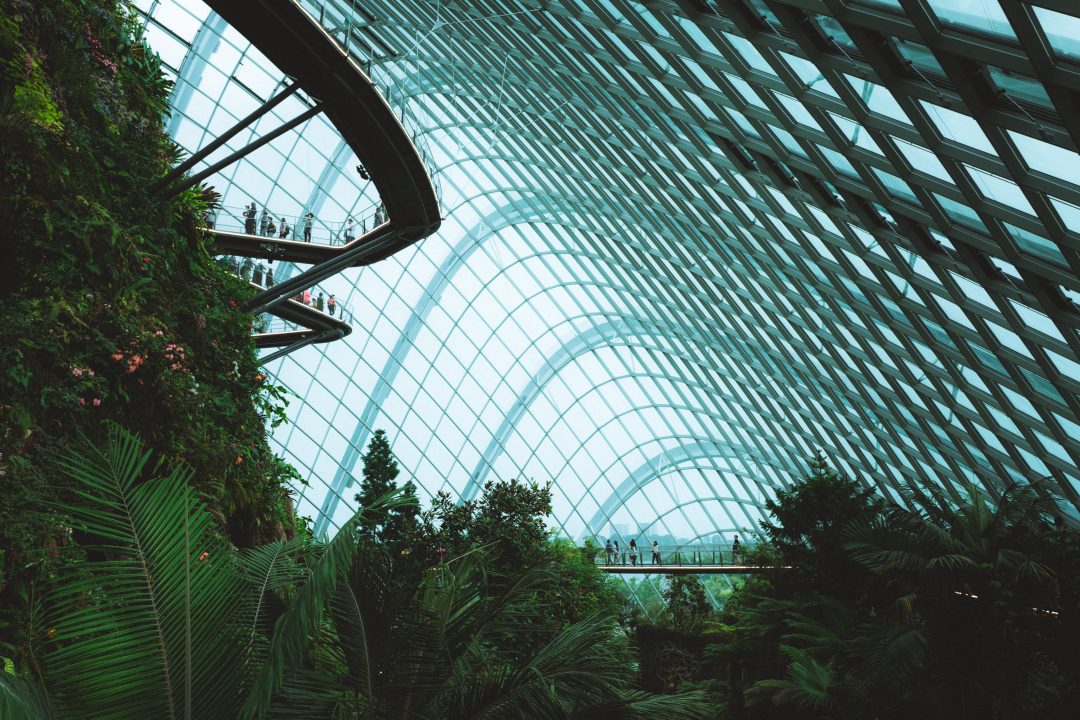
Photo by Samuel Zeller

The Dutch are highly digitalized, with 97% of Dutch households having access to the internet, and internet traffic growing 22% annually. The government clearly has the means to digitize its public services, so it did. In the Netherlands, each and every person is required to have health insurance and the process is made easy. Registration takes place online, along with the application for subsidies for low-income households, and numerous Dutch healthcare apps are available to make things even easier. The Dutch government also has grand plans to cut costs through e-health.

An important step in this reduction of costs is ensuring that each citizen has his/her own personal digital healthcare environment, allowing each to manage to a certain degree a personal health record. Although the sharing of personal data has lost of its attractiveness in the wake of the Facebook data-scandal, this could allow caretakers to know more about their patients and adapt their services accordingly.

Long-term innovation within e-health is also ensured. The Dutch Ministry of Health, Welfare and Sports organize training programs to change the attitudes and behaviors of health professionals in both public and private organizations towards innovative healthcare. One example of this is the foundation of the Health Innovation School in 2017, the first of its kind worldwide. In more practical terms, the Dutch government wants 75% of the highly dependent population – the chronically ill and vulnerable elderly – to be able to independently monitor their own health by 2019, and to ensure quality by making on-screen communication with a care provider available 24/7.

Naturally, e-health is no miracle solution. Numerous sub-problems are yet to be resolved.  The obvious difficulty is training the elderly to use new technology, but a lack of public funding is another issue. The 2017 government coalition agreement stated that a mere €40 million – in a country of 17 million – will be invested in innovative e-Health projects for healthcare over the next 4 years. If the state is supposed to play a role in the innovation of its public services, then this amount is a little disappointing. Finally, and probably most importantly, the previously mentioned problem of data-confidentiality has not received a clear-cut answer when it comes to medical information. It has yet to be decided how exactly a centralized digital platform, which gives access to all medical information of virtually everyone should look like.

Nevertheless, e-health represents an opportunity. With an aging population, e-health offers a way to preserve social achievements of the healthcare systems in Western countries. Furthermore, developing countries will face a similar problem in a couple of decades as well, and with a less financial means. By 2050, China’s GDP per capita is estimated to be roughly half that of the US, yet it will allow its healthcare system to allow equal access to all, over an area of 9.6 million km².

In a word, e-health could contribute to ensuring that healthcare services can be provided to all citizens, not only citadins.

THE CITY - April 2018

The More Things Change

Written by Christian Hazes, Staff Writer, and Phillip Morris, Editor-in-Chief

When empires fell their cities were ransacked and rebuilt in images to the liking of the conqueror. This city was raised as a monument to digitalization’s triumph over analog. Wires, sensors, and the gadgets people wore gave the city a nervous system to regulate itself, and the people living within it. With the only exception being the bad parts of town where it was deemed a bad investment to build the cybernetic infrastructure, and where few people could afford the latest smart devices. In this blindspot the government needed to be content with using aging smartphone data and social media posts.

The most basic, and constant, function of installing such a thorough network is monitoring the ebb and flow of the city’s inhabitants. In the morning large swaths leave the residential areas for the business districts, and in the evening they return. While the system can, and does track each individual, at these peak times people can find anonymity in the crowd as their individual dot merges with many others, so that to the human eyes watching them the traffic is only a continuous stream. On the weekends the movement of the dots was a bit more random.

Jennifer was glad for this weekend, as it was the first in a long while that she didn’t need to pick up an extra shift cleaning some high rise office or hotel. On top of that, not only was she free from work, but she was free from parental responsibilities as well. Emmie had made plans to meet up with James at his new place across town. Her’s used to be the hangout house until James’ dad got a  new job and moved the family to a “nicer” part of town. Jennifer didn’t mind where she lived, there were plenty of parks and things to do, besides, she’d grown up there. The only complaint she had was the concentration of unsavory types that had come in recent years. Everyone knew that if you wanted a chance of not getting caught doing something you shouldn’t, you’d better do it in the Dead Zone. Last year a condemned apartment building collapsed on itself after a meth lab hidden inside exploded. She wouldn’t have wanted that that to happen anywhere else either, but at least if there had been some city sensors in the area it might’ve been caught before getting that far.

That incident wasn’t on her mind today though. It was such a bright and sunny day that she was determined to enjoy it in a park. She got John out of bed with a kiss and the promise of a cheeseburger for lunch.

“You can lay about in the park just as easily as you can here” she goaded him. It was always a struggle getting him to go for walks, but he knew he needed it as much as she did.

John had dragged his feet when they first left the house, but by the time they could smell the park’s fresh-cut grass even he was getting into the idea of being outside. The park was a hive of activity by the time they got there. Kids occupied nearly every climbable surface with just a few adults sprinkled here and there. It was one of the few places in the neighborhood the city had wired so most parents were comfortable letting their children play there alone.

Some kids hit a baseball in their direction and John plucked it out of the air with ease before sending it straight into the glove of the closest young player.

“I should come back here with Emilio” he said, “Get him warmed up for the season.”

Jennifer hugged his arm tightly as they continued to walked. There was a snowball’s chance they’d be out here without her pushing them out the door.

John stopped suddenly and clutched his chest.

“John?”

He tried to brace himself on her arm but his weight took them both to the ground.

“Help!” she screamed. Tears were already rolling down her cheeks, burning hotter than the yellow sun overhead.

Not much later something different was hovering over the couple. The defibrillator carrying drown had been dispatched before John had even registered he was in trouble. Miles away in a cold dark room, a computer had noted the change in his gait and vitals that statistically indicated an oncoming heart attack. The difference between life and death is often just a matter of minutes, maybe even seconds. Time is one of the most resilient adversaries, but technology had kept it at bay this day.

Jennifer accompanied her husband to the hospital when the ambulance arrived. She stayed with him even after the doctors said his sedatives would keep him asleep all night. The rational part of her brain knew that he would be alright and that there was nothing she could do to help, but irrationality is a part of being human, she was committed to staying by his side.  She called James’ parent to ask if Emmie could stay with them for the night. He could stay as long as she needed. Then she put her phone on silent so she could focus on being with her John in this moment.

The drone had got to them quick, and no lasting damage was done to his heart so keeping him sedated overnight was just a precaution, but she still remembered a time when routine hospital stays could end in death. As she looked out the window at the setting sun she was thankful those days were long gone.

She would’ve felt less at peace with how life in the city had changed, if she knew that not all technological advancements are for the people’s benefits. At least not people like her.


Photo by Josh Riemer

Cities have always benefited from a diversity in their population. Different people have different ways of thinking and those ideas intermingle to drive innovation and progress. Technology has also been a driver of progress, and those that manage this techno-, wired-, cybernetic-, smart-city believe technology is the only ingredient needed for progress.

While retirees were prone to complaining about the lack of privacy, and how they “couldn’t take a shit without the government asking if they wiped”, the majority of people in the city didn’t think twice about the tech integrated into the fabric of their lives.

Emilio was born and raised in the present era. For him, the idea of not being able to look up at least the basic details of anyone you just met was something for the history books. He couldn’t come to grips with how it would be to live in a city surrounded by total strangers.

“That must’ve been so stressful,” he said once in class while they were discussing civics.

“We didn’t mind”, his teacher told him. “When you wanted to know someone better you just had to ask them.”

Who had time for that? he thought.

That same thought crossed his mind again when James’ parents told him he’d have to spend the night because his parents were in the hospital. Who has time for that!

They tried to keep the mood light during dinner. They mentioned how Emilio’s latest growth spurt left him too long for his clothes. They promised that only very rarely did anyone die from a heart attack while in the hospital; not with the fancy monitors and algorithms double-checking the doctors. Emilio was old enough to know that rarely was not the same as never.

Emilio has made up his mind that he needed to be with his dad. Getting ice cream after dinner wasn’t enough to distract him. Neither was beating James at video games enough to calm his mind. While they were supposed to get ready for bed, Emilio told James his plan. He was going to sneak out when James’ parents went to sleep and make his way to the hospital.

Their parents might be angry with him sneaking out, “but, you know, it’s easier to say sorry than get permission.”

James didn’t try to stop him, cementing his place as the best friend, so he got into bed and pretended to be asleep while Emilio snuck out the window.

Emilio got a few blocks away before he realized he’d forgotten his phone. He knew the direction of his house, be the finer details were lost on him. He told himself he wasn’t scared to be alone in a strange part of town at night, but that’s not what the cameras saw.

The city was testing a new predictive policing strategy. After only a week it was already reducing crime in the neighborhoods it was deployed, not that there was much crime in the wired parts of the city to begin with. Still, there were much fewer calls about suspicious characters prowling around.

Emilio came to a corner that in no way looked familiar. He nervously glanced around for a clue which direction he should go. Miles away in a cold dark room, a computer picked up his nervousness and that he was suspiciously without a cell phone. It noticed him move towards the door of a house then change his mind when the front light turned off.

Emilio had just set off in what he was sure was the right direction when the police car rolled up behind him. A voice barked at him to stop. Emilio tried to explain what was happening. He told them to call his parents or James’, but the police weren’t inclined to listen. Besides, if the system told them to take the boy in that’s what they had to do.

Emilio was glad James hadn’t come with him because he cried when they put the handcuffs on. Then, to make matters worse, the police car was far from comfortable. Emilio needed to twist into awkward positions to keep from sliding around. He waited for an hour at the police station before their system synced up with the hospital’s to confirm his story.

When the officer’s escorted Emilio to his dad’s room in the hospital, his mom was asleep on a cot. Emilio would always remember how they didn’t apologize to him or her, and instead just explained how they system was still working out the bugs.

THE CITY - April 2018

Bridging the Urban-Rural Gap for Food Equity

Written by Abigail Hudspeth

Picture an urban city. You might envision skyscrapers, traffic, noise, bustling people, the city is alive. Now picture a rural town. In your imaginary town you might have a single main road, a sleeping dog on the corner of a café, and an endless expanse of surrounding crop fields.  These two pictures could not be more opposed. The growing distance between rural and urban areas extends beyond our imagination. In reality, this distance has major impacts on society, especially on the way consumers value food. With the growing divide between rural and urban areas, people are losing their connection to real food and the ancient tradition of farming, generating injustices in our food system.

Rural and urban areas are separated by more than mere geographic distance. A lack of public transportation between rural and urban for instance often discourages interdependence and travel. Moreover, the two worlds are separated in economic and political terms as well. The percentage of farmers in the United States has dropped from 30% in the 1920s to 2% in 1987 and has approximately flat-lined since. Today about 80% of the U.S. population lives in urban areas. As people migrate to cities, the tax revenue in rural areas decreases and with it the quality of schools, housing, and infrastructure. This exacerbates a cycle incentivizing migration to the cities and compounding economic problems. These economic struggles have indirectly led to the rise of political divisions. Beginning in the 1980s, Republicans in the United States sought support from the white, rural, and poor voters who historically had supported the Democrats’ welfare acts. By exacerbating racial tensions, the Republican party converted many of those living in rural areas.  These physical, economic, and political barriers drive a wedge between the metropolitan and the rural agrarian.

Even though the majority of the population who lives in urban areas finds it difficult to connect with people from rural areas, the rural agriculture provides everyone with a ubiquitous resource, food.  Farming over the 20th century transformed from being many small farms to a few industrial “specialized farms in rural areas where less than a fourth of the U.S. population lives”. Because of these changes, we are losing a vital connection to the value of real food. Can you picture a peanut plant? Did you know that cashews hang from the bottom of a large cashew fruit? Or that artichokes are actually the unbloomed flowers of thistles? Some of this unfamiliarity stems from never physically seeing the crops that produce the food. As we lose connection with agriculture, we also lose the knowledge and the respect that comes with it.  

Photo by Max Pixel

Our failure to appreciate nature’s gift has warped our perception of the value of food. We demand cheap food without taking into account the negative externalities of it. Government actions have only exacerbated consumer expectations for decades. The government shells out billions every year (16 billion to be exact) to farmers in the form of crop insurance. This helps minimize the risk of farming, but it also subsidizes certain crops making them cheap. Corn and soy are often recipients of huge subsidies, hence the reason soda, candy, frozen foods, and chicken nuggets (which are all derived from corn) are cheap as well. Not only do these affordable options drive the poor into obesity, but they also skew the value of food. Cheap food diminishes consumers’ appreciation of agricultural labor. Any visible reminder that could remediate society’s error, slips away as cities alienate from the countryside.  

The price of food is never cheap enough for the ceaselessly demanding consumer. Even I constantly bemoan my grocery bill. When I see a dozen free range eggs for 6 dollars, I don’t think about the value of the farmer’s work that brought them to me. At least, I didn’t use to. After working on a rural, organic family farm in Costa Rica, I gained a fresh appreciation for the labor a dozen eggs requires. Rising before dawn every morning, I fed and watered the 400 chicken, collected dozens upon dozens of eggs, meticulously cleaned each egg of bird droppings, blood, and feathers, and cared for the baby chicks. Each carton was packed with care and filled with the product of my toils. Selling a dozen eggs for about 4 U.S. dollars suddenly didn’t seem enough. I had leapt over the divide between urban and rural, and I gained an appreciation for farmers’ hard work. On the other side of a price tag, there are rural farmers making ends meet for their families. As the distance between grocery shoppers and farmers grows, so does the inequity between them.  

Creating inequality is not the only injustice caused by the rural-urban divide. While we lose sight of the value of real food, we create a culture of waste and animal cruelty. Throwing away a half-eaten plate of food is much easier without thinking of the glaring waste of water, soil, energy, and human resources necessary to bring you your dinner. As rural and urban populations separate, this glaring guilt fades into an abstract reality disconnected from the rest of society. In a similar fashion, meat CAFOs (concentrated animal feeding operations) with their unventilated, tightly packed, squalid conditions, are purposefully placed out of sight of urban customers in the countryside. Maintaining distance is a purposeful decision by meat processing companies; a shopper’s conscience easily buys inhumanely produced meat, when they have never seen a CAFO with their own eyes.

Appreciating food for its labor costs begins with closing the social gap between rural and urban areas. As more people move to the suburbs and out of cities, this creates an opportunity for integration. Providing incentives for farmers to buy property near suburbs is a first step towards decreasing social barriers by decreasing physical distance. By blending the suburban with the rural, we can stimulate the rural economy and begin to reverse the process of urbanization. After knitting together a patchwork of farms and towns, we must sew together the divisions of community that come from political and economic differences. Community gardens have been used for decades to foster collaboration and a sense of unity. Community gardens also raise awareness about the value of food and provide healthy alternatives to the unhealthy cheap foods that flood the processed food aisle. Not only can community gardens be used to blend suburban and rural areas, but they can also be used in cities. Since farming in cities is impractical, community gardens compromise land scarcity with community awareness of agriculture. By increasing the proximity to agriculture we can reinstall appreciation for it. Community gardens are not the only way to increase agricultural awareness and practices in the city. Indoor farming is rapidly expanding in urban areas by refurbishing old warehouses. The most profitable type of indoor agriculture, aeroponics, grows high-value leafy greens and vegetables vertically in giant stacks of soilless plants under LED light. This precise technique cuts input costs by spraying plants with a nutrient mist and reducing transportation fuel because of its proximity to stores.

Knitting together our patchwork society sew together more than the physical divisions. We need government and business intervention to focus policy on bridging these divides. Reversing a process that took decades will take decades, but more is at stake than resewing the urban-rural quilt. By integrating rural and urban communities and fostering agrarian knowledge, we are protecting the integrity of the food and farmers we need every day.

DRUGS - February 2018

Art to Deglamorize the War on Drugs

Text by Valeria Posada Villada

Take time to reflect on the imagery in the artworks before moving on to the description.

When it comes to the illegal drug trade, nothing is as it appears. Criminal power is maintained through hidden codes, rules, symbols, and double messages designed to deceive those outside of the network, leaving the facts suspended between fantasy and reality. The lives of those directly affected by the drugs industry and the artists, who, in their attempts to go beyond the mirage, reflect upon this issue, and present an alternative to the sensationalist newspaper clips of shootings, and international pop culture products glamorizing and exoticizing gang members, assassins, and cartels. The goal of witnesses and artists is to portray the disruptive effects produced by the mirage of the drug trafficking business and point out the absences and contradictions it generates within their societies.

For this article I have chosen three Latin American artists, from countries which are part of the drug supply chain, particularly cocaine, who have lived through successive waves of violence as a result of the disastrous attempts to eradicate the illegal drugs business through hard knuckle policies; their countries are Colombia, Honduras, and Mexico. While the list of artists from this region who have produced and are producing audiovisual reflections on the subject keeps on growing, I have decided to present these particular artworks because their approach responds to or exposes the murky character of drug violence. They explore the themes and symbols which reveal its overlooked individual and social consequences, giving importance to the account of those individuals who are usually portrayed as secondary characters in a script routinely belonging to the powerful: politicians, policemen, and narcos.

Mexico

Huellas de la Memoria (Traces of Memory)

Alfredo López Casanova

2016

The first shoes that form part of Huellas de la Memoria belong to Irma Leticia Hidalgo. This woman from the state of Nuevo León has been looking for her son, Roy Hidalgo, since January 11, 2011, a teenager abducted from his house by individuals in bulletproof police jackets, who, like other Mexicans, became a victim of the complicity between members of the State and drug trafficking organizations. While assisting in some of the search rounds organized by women like Leticia, which traveled to different ministries and locations in the search for their loved ones, the sculptor was inspired by their shoes. For him, their worn out appearance was both an expression of their love and of the hardships of their journey. López decided to set up an open call for relatives to donate their footgear and, by engraving the names of the disappeared in their heels, transformed these objects into uncomfortable pieces of art whose political statement confronts the official neglect on the topic of the over 32,000 disappearance cases registered since 2007. Joined together, the shoes are a collective embodiment of the absences produced by drug-related violence, and a visual stamp which emphasizes the lack of justice. Exhibited at the Museo Casa de la Memoria Indómita (Memory House of Indomitable Memory) and other cultural centers in Europe, the shoes are not arranged chronologically, translating the relatives’ inability to establish a dividing line between past, present or future while the disappeared cannot be claimed. Until the whereabouts of the abducted are known, their lives, like the shoes, will be left hanging in the air.

Honduras

Celda #16 (Prison Cell #16)

Alma Leiva

2009

Like López, Alma Leiva is a collector of the mundane objects that speak of the individual and collective effects of drug-related violence many Centro Americans flee from when emigrating  to the U.S. The pieces are later used to construct site-specific installations, which stand as allegories of criminal acts or locations, and depict the immigrants’ feeling of estrangement from that which used to be intimate. Beds, sofas and kitchens stand alongside football courts, playgrounds and graveyards, displaying the overlap between the private and public sphere as a direct consequence of the shattered sense of security many immigrants cannot escape from and which continues to weigh upon them. In this sense, Celda #16 represents the memory of a criminal act responsible for transforming a familiar space into an emotional prison. The photograph refers to the 2013 massacre which occurred in San Pedro Sula’s preschool Mi Segundo Hogar (My Second Home). This violent event took the lives of five adults (David E. Rivera, Delmi R. Rivera, Helen A. Rivera, Carmen Valdivieso) and one child (Daniela A. Martínez), at the hands of Barrio 18 members, one of the biggest transnational gangs, or maras, of Central and North America. Newspaper reports cover the walls of the classroom but their contents are whitewashed, since the motivations for the attack remain unknown. Instead, the dripping wall paint serves to highlight the icon of xibalba which surrounds the room, and which is associated with the  Mayan “place of fear” or underworld. Victims reveal themselves not only through their photographs but through the messages written on the blackboard, leaving traces of their presence by replacing the phrases “El colegio es tu seguridad/school is your safety” and “Do not leave the house. You’ll stay at school” with a persistent “No.” 

Colombia


El Bloc del Narco #9 (The Narco’s Bloc #9)

Camillo Restrepo

2016

At first glance, Restrepo’s work may seem to stand in stark contrast to López and Leiva’s, since it does not approach the subject from the victims’ viewpoint or deal with the psychological aftermath of violence. However, this series shows the impact of the illegal drug trade on the nation through what the artist has called the ‘narcotization’ of social life. That is, the infiltration of terms, objects, and events in the daily life of Colombians, which are connected to this problem but whose influence remains hidden in plain sight because they are codified through the use of aliases, acronyms, and words with double meanings. By compiling a list of all the quotations that have appeared in the daily El Tiempo newspaper referring to this issue, and displaying them alongside mocking headlines, Restrepo makes evident pervasive reach of the War on Drugs and the social phenomena that have appeared as a consequence of its presence. For example, in Issue #9, the black headline advertises narco-shirts that have been used to smuggle liquid cocaine as ‘the latest trend in Italy’ while, at the same time, pasting newspaper tags that refer to recent corruption ‘carrusels’ (Carruseles de contratación), Express Kidnappings (paseos millonarios), and Social Cleansings (limpieza social). Restrepo’s childish drawings render Colombia’s social reality even more outlandish, in a similar way to Leiva’s naive but alienating installations, and expose  a world in which individuals such as ‘Winny’ and ‘The Justice League’ have enough power to rule over the fate of many, and controversial figures such as George W. Bush or Don Berma (AUC paramilitary and leader of Envigado), are regarded as exemplary figures quoted in the “narco-comment section”.  Without doubt, the artist’s’ poignant humor overturns criminals’ cryptic vocabulary, transforming his artwork into a confrontational act through which truths are disclosed. Therefore, it is no surprise that his piece was published under the name of ‘Bloc’, alluding to a military denomination used to classify paramilitary groups, one of the armed actors with strong historical ties to the illegal drug trade in Colombia.

Conclusion

These three artists expand the vantage point through which the War on Drugs is portrayed by helping viewers understand, tangibly and emotionally, the individual and social phenomena produced by this campaign that remain abstract to many. Objects, spaces, and vocabularies become imprints translating phenomena associated with criminal power, such as disappearance, displacement, and corruption, in a skillful yet raw manner, without resorting to voyeurism or overexposure. Borrowing Leiva’s exhibition title, these artworks stand as ‘counter-archives’, not only because they distance themselves from the criminal figures or melodramatic tabloids by focusing on the ‘renegades’, but primarily because the agency of those who live alongside violence is made present. Victims and witnesses do not passively react to violence, they protest, resist, disturb and mock. Their life experiences and opinions expose the paradoxes generated by a campaign that aims to end violence through the same means it supposedly stands against, leading audiences to reevaluate their position towards the images and stories that the media disseminates about this topic, which transform Latin American geographies and populations into a contemporary Wild West scenario in need of assistance and foreign military intervention. It is never too late to start wondering whether the consumption of these products should not be considered part of the reason why the War on Drugs continues to be seen as a feasible option, despite its evident failure to reduce both drug production and consumption.